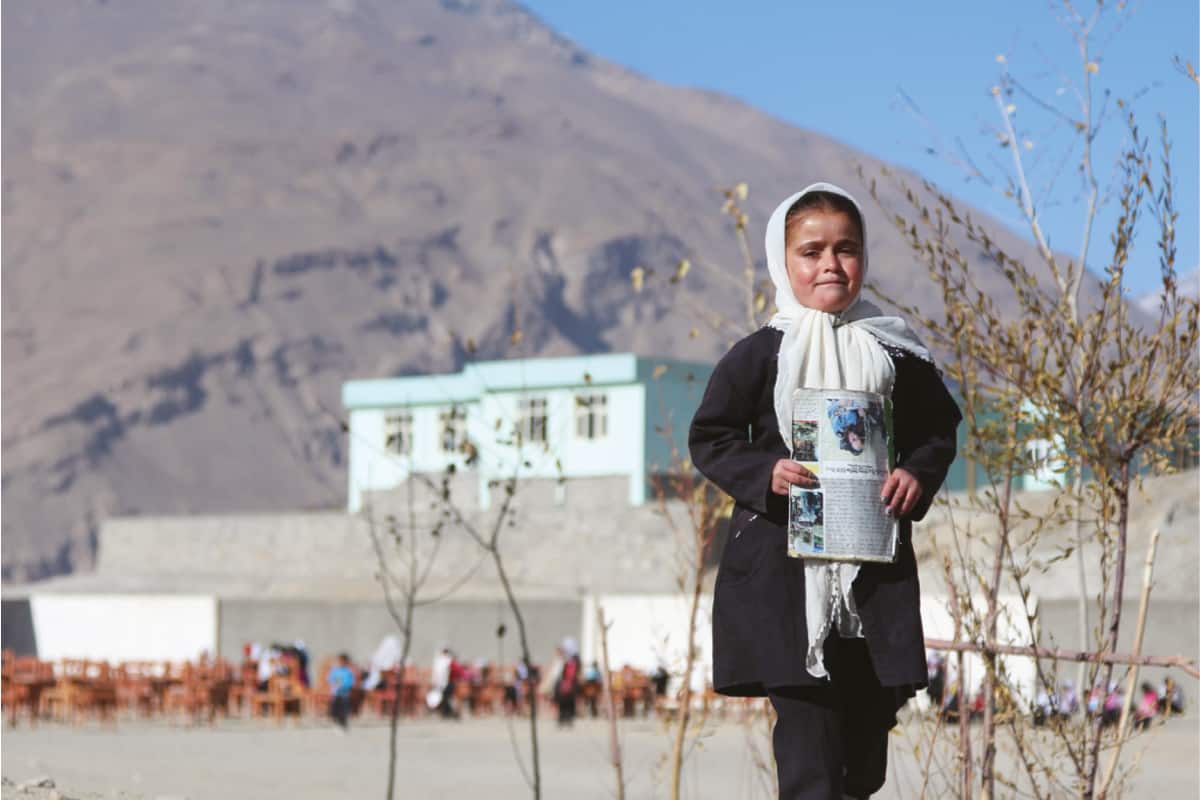
In Afghanistan, a lack of schools and school infrastructure, along with nearly three decades of armed conflict, poverty and climate-related disasters have had a direct negative impact on children’s access to education. A shortage of qualified teachers and learning materials also contribute to the country’s low school attendance rate. While the gender gap is narrowing, a large percentage of girls still do not have access to school education.
In response to these challenges, in 2002, the Aga Khan Development Network (AKDN) began implementing a range of interventions aimed at strengthening the Afghan Government’s capacity to deliver quality education, and at supporting and promoting educational access and quality learning opportunities for all children, particularly girls. Building on the work started by Focus Humanitarian Assistance (FOCUS), an AKDN affiliate that had been offering emergency assistance since 1995, these education efforts led by the Aga Khan Foundation (AKF) cover four of the country’s most rural and mostly remote provinces: Badakhshan, Baghlan, Bamyan and Parwan.
In 2009, with funding from the Government of Canada, AKF started the Girls’ Education Support Programme (GESP) in three provinces in Afghanistan. That year, 225 girls graduated from GESP-supported schools. By 2013 (the final year of the programme), the number of girl graduates had risen to over 2,300, having increased by more than ten-fold within five years.
An internal study conducted in 2013 examined the trends in both GESP and non-GESP schools, using descriptive statistics and qualitative research to explore the story behind this dramatic leap in numbers. The key findings and conclusions of this study are highlighted in this document.